Every bank shows its own accounts. None shows the whole household.
The question I could not answerOur money sits in several accounts and cards. Each app shows its own part, and none of them could tell me where it all went this year.
Sorting was the choreA spreadsheet works until you have to categorise 200 rows every month. I wanted to decide once per payee and never again.
I already ask an agent everything elseIt should answer money questions too, from our real numbers and not from a guess.
What it does.
The year at a glance
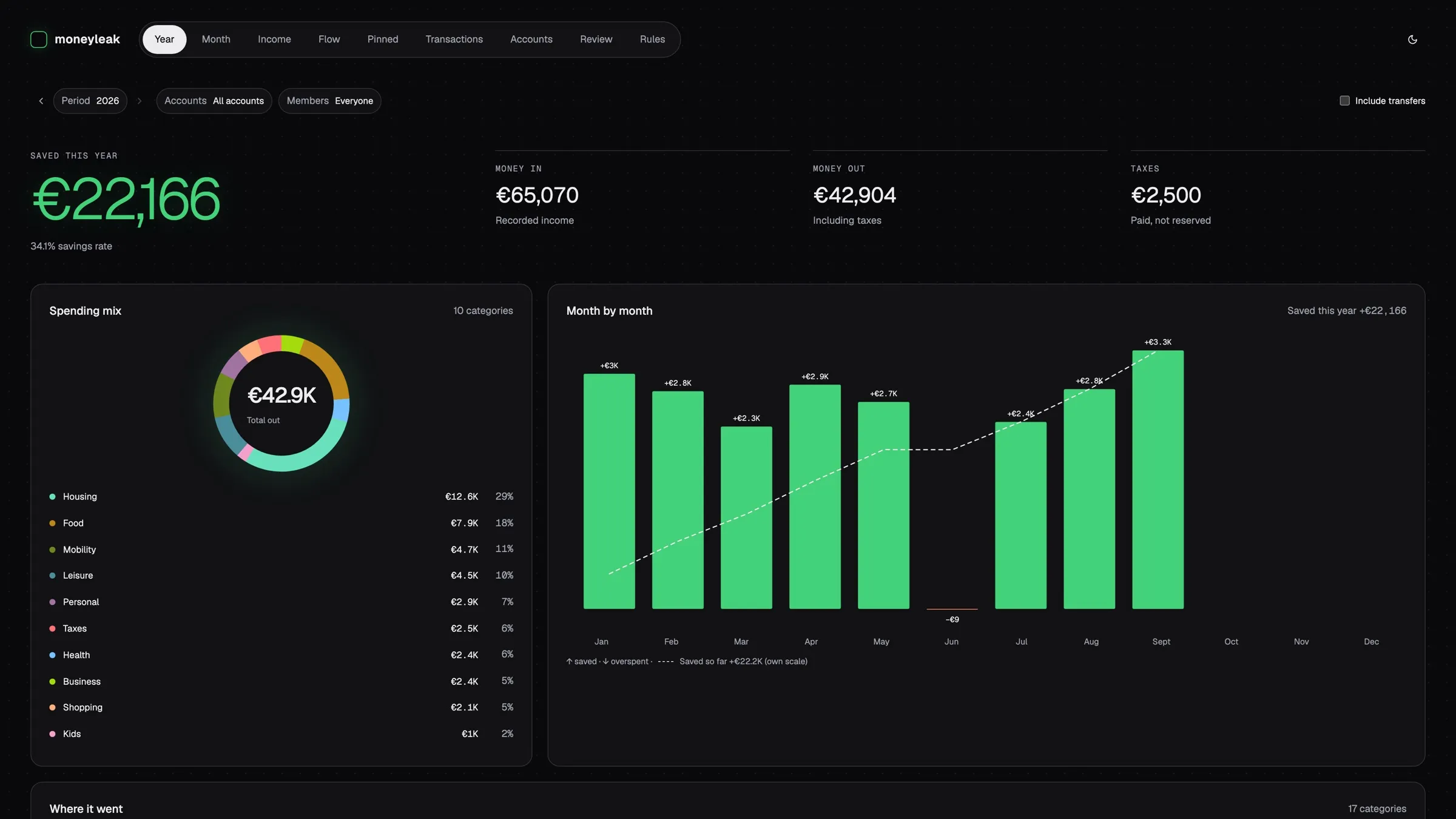
What came in, what went out, what went to taxes and what is left. It also shows the spending mix by category and the savings for each month.
Rules that learn
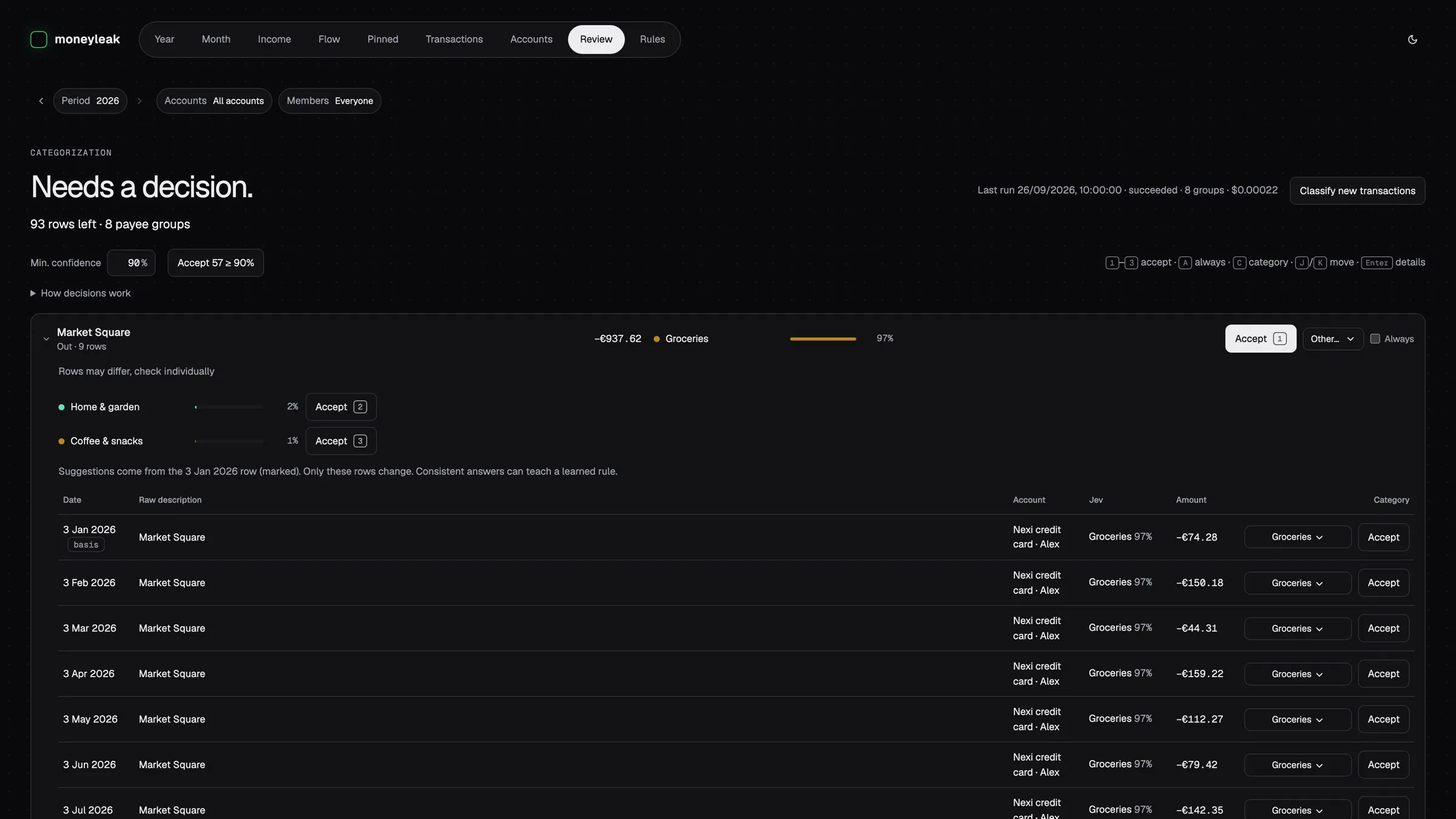
Jev classifies new rows and says how sure it is. Sure answers apply on their own, the rest wait in a review queue. Accept one, tick Always, and MoneyLeak stops asking about that payee.
Where every euro goes
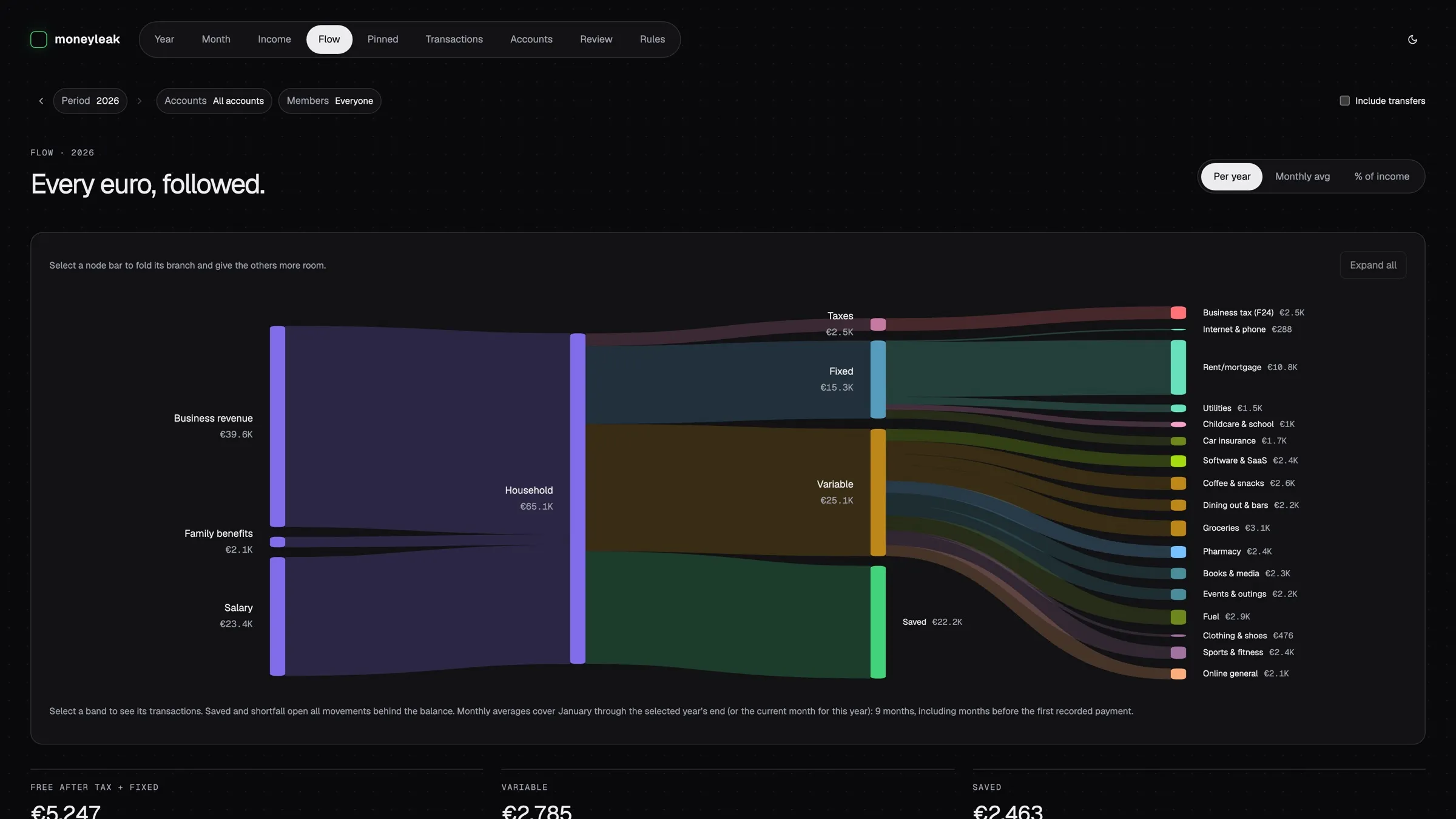
The flow view puts income on the left and taxes, fixed costs and variable costs on the right, with the savings in between. Fold a branch to give the others room.
Pinned views
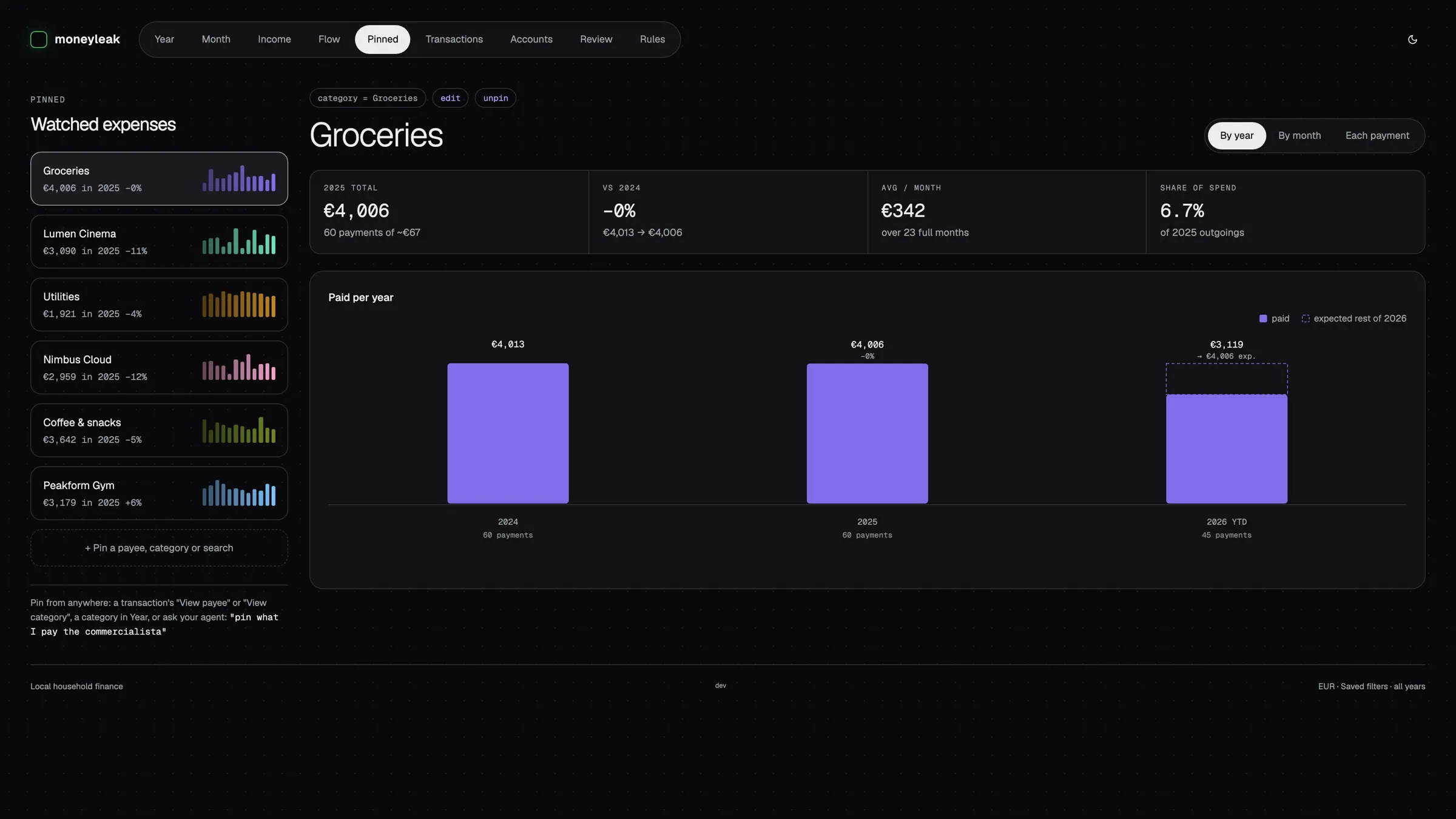
Pin a payee, a category or a search and watch it over the years: the total per year, the change against last year, the monthly average and its share of all spending.
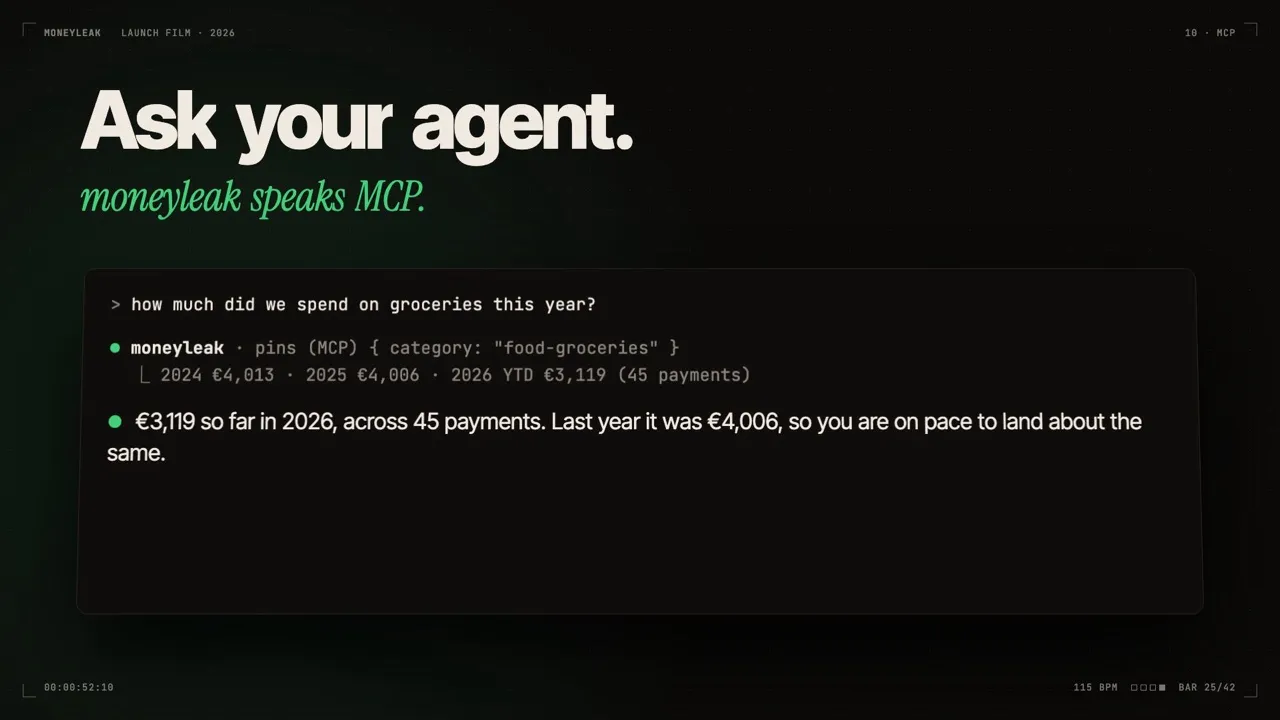
Ask your agent
MoneyLeak has no chat of its own. It gives Claude or Codex 22 tools over MCP, so the agent you already use answers from your data.
Also in thereMonthly budgetIncome by sourceAccounts and balancesLight and dark theme
One local file, read by the dashboard and by your agent.
Everything ends up in one SQLite file on your machine. A small server reads it and offers the same data twice: to the dashboard in the browser, and to your agent.
Import
One command reads the files your banks already export. A new bank means one new parser, nothing else changes.
Classify
Your rules run first. What is left goes to Jev as one question per payee, with amounts, account numbers and names removed. Answers above 90% confidence apply, the others wait for you, and consistent answers become new rules.
Serve
The server only listens on this machine. The agent endpoint keeps no session and needs a token that never leaves your disk.
Architecture
MoneyLeak
Who uses MoneyLeak and what it depends on. No technology yet.
Pick a flow, then step through it.
juridev
Explorer
apps
moneyleakdashboard
moneyleak-serverCLI, HTTP, MCP
packages
moneyleak
classifyrules and Jev
contractshared types
dataSQLite access
importersbank files in
runtimeimport and queries
uicharts and tables
Project graph
Arrows are the imports between projects, read from the Nx project graph. Boxes are layers set with Nx tags. A lint rule fails when a project imports from a layer it may not use.
The same system at five levels, after the C4 model. Solid boxes are parts of MoneyLeak, dashed ones are outside it.